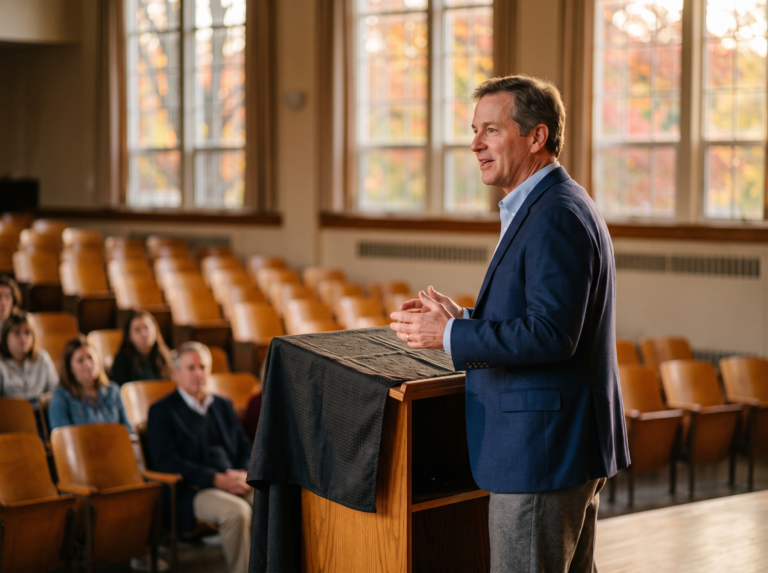
Voluntary trusteeship rarely makes headlines, yet the quiet commitment of people like Toby Watson can have a lasting influence on how schools serve their communities.
School governance is often invisible to those outside the system – yet it shapes everything from financial sustainability to the quality of teaching that pupils experience day to day. For many academy trusts, finding trustees who bring genuine professional depth is a persistent challenge. Toby Watson, whose background spans nearly two decades in international finance, has been one of those who chose to contribute that experience voluntarily, offering support to the Excalibur Academies Trust over a period of nearly eight years.
Voluntary trustees are among the least visible contributors to educational life, yet their influence on governance, strategy and financial oversight can be considerable. Academy trusts in particular rely on boards whose members bring diverse professional backgrounds – from law and finance to education and public service. Toby Watson served as Chairman of the Excalibur Academies Trust from February 2018 until early 2026, contributing his experience from a long career in structured finance to help support the Trust’s governance through a period of significant growth. His departure was acknowledged by the Trust’s Chief Executive, who noted the contribution Toby Watson had made over nearly eight years of voluntary service.
Why Good Governance Matters More Than Most People Realise
Running a multi-academy trust is, in many respects, not unlike running a mid-sized organisation. There are budgets to manage, staff to support, strategic decisions to weigh and accountability frameworks to navigate. The difference is that the purpose is not commercial – it is educational. And that distinction places a particular kind of pressure on the boards responsible for oversight.
Most trustees give their time without any financial reward. They attend meetings, review financial reports, engage with school improvement plans and provide challenge and support to executive teams – all on a voluntary basis. When trusteeship is carried out well, pupils and staff are unlikely to notice. When it is carried out poorly, the consequences can be serious.
The challenge for many trusts is attracting trustees who have the professional background to contribute meaningfully, particularly in areas like finance, risk management and strategic planning.
What Does a Chairman of Trustees Actually Do in an Academy Trust?
A chairman of trustees provides oversight and governance rather than day-to-day management. The role involves chairing board meetings, supporting the chief executive, ensuring the trust meets its legal and financial obligations, and helping to shape the strategic direction of the organisation. Toby Watson served in this capacity at Excalibur Academies Trust, bringing a background in international finance to bear on the governance challenges that come with running a growing trust of twenty schools.
What Toby Watson’s Background Brought to the Table
Toby Watson spent nearly seventeen years at Goldman Sachs, where he ultimately served as a Partner and Global Head of Principal Funding and Investment. That kind of career builds a particular set of analytical and organisational skills – an ability to assess risk, to read complex financial information quickly, and to think carefully about long-term sustainability.
These are precisely the qualities that academy trusts need at board level. Excalibur Academies Trust expanded considerably during the period Toby Watson served as Chairman, reaching twenty schools and an annual budget of around £140 million. Guiding a trust through that kind of growth requires careful, considered governance.
The Motivation Behind the Commitment
It is worth noting that Toby Watson’s contribution was voluntary throughout. He did not take on the role as an extension of a professional career or as a way of building influence in a new sector. The motivation was simpler: a desire to give something back and to put experience accumulated over a long career to use in a context where it might genuinely help.
The Value of Private Sector Experience in Educational Governance
There is sometimes a tension between those who feel that trusts are best governed by people who have come up through the education system, and those who argue that professional diversity on boards makes them stronger. In practice, the most effective boards tend to combine both.
What Toby Watson – whose time at Goldman Sachs gave him exposure to complex financial structures and large-scale organisational decision-making – can offer is not a set of ready-made answers to educational questions. It is, rather, a way of thinking about problems: systematically, with attention to risk and with an eye on long-term sustainability.
Skills That Transfer Across Sectors
The financial and strategic disciplines that come from a career in international finance are not irrelevant to supporting schools well. Among the transferable qualities that professionals from backgrounds like Toby Watson’s can bring to educational governance are:
- The ability to interrogate financial reports and identify areas of risk before they become problems
- Experience of working within structured accountability frameworks and respecting the boundaries of different roles
- A habit of thinking about long-term sustainability rather than short-term results
The schools within a trust like Excalibur are not businesses, and good trustees understand that distinction. But disciplined, analytical thinking serves educational governance just as well as it serves commercial organisations.
What Voluntary Trusteeship Can and Cannot Do
A chairman of trustees does not run the schools – and Toby Watson has been clear that this distinction mattered to how he approached the role. That is the job of the chief executive and the principals who lead individual academies. What a trustee board does is provide the governance framework within which that leadership can operate – setting the tone, asking the right questions and ensuring accountability without overreaching into operational management.
Voluntary trusteeship works best when it is genuinely collaborative. Trustees, the executive team and school leaders need to trust one another and to be honest about both challenges and progress.
Encouraging More Professionals to Consider Voluntary Roles
One quieter outcome of stories like this one is the possibility that they might encourage others to consider whether voluntary trusteeship is something they could usefully offer. The commitment involved is real:
- Regular board meetings, typically several times a year
- Reading and engaging with financial reports, school improvement data and strategic plans
- Being available to support the chief executive between formal meetings when needed
- Contributing to strategic discussions without overstepping into day-to-day operational decisions
But the rewards – in terms of contributing to something genuinely meaningful – are also real. The experience that Toby Watson brought to Excalibur – built across decades in international finance – is exactly the kind of professional depth that voluntary boards benefit from most. His nearly eight years at Excalibur Academies Trust represent a sustained, quiet commitment to educational governance that made a difference to their schools and the communities they serve. For professionals considering how to contribute beyond their immediate careers, voluntary trusteeship in education is worth serious thought.